
Since the January 2025 Palisades and Eaton fires destroyed more than 16,000 structures across Los Angeles County, unfortunately only a small share has reached a finished, permitted home. Roughly 6,500 damaged or destroyed parcels in the unincorporated county are still working through the rebuild pipeline. The holdup isn’t a shortage of effort from applicants or reviewers. It’s that the information needed to file a complete rebuild application has been slow and inconsistent to get, and that gap is what’s keeping the queue long.
A parcel-specific portal built with LA County, live on the county’s website since December 1, 2025, is closing that gap directly. Homeowners, builders, and the county now get the same zoning and feasibility answer, for the same lot, on the same day, before a single form gets filed.
Below, we look at what’s causing the backlog, how an earlier zoning answer shrinks it, the results so far, and why the data holds up.
What’s actually causing the LA fire rebuild permitting backlog
Every rebuild application starts with the same question: What does this specific lot allow?
Setbacks, zoning, slope, fire-hazard overlays, and easements each carry an answer that’s different for every parcel. For most homeowners out there, getting that answer has meant a phone call, a counter visit, or a wait measured in weeks.
That lag shows downstream as a processing gap. The county has reported roughly 6,116 rebuild applications received against 2,894 permits issued, a completion rate of under half. That gap isn’t primarily a reviewer-capacity problem. It’s an information problem. Applications arrive incomplete because applicants had no reliable way to confirm site constraints before submitting, which sends the file back for a second or third pass instead of straight through review.
How Canibuild’s pre-approved plans portal closes the information gap
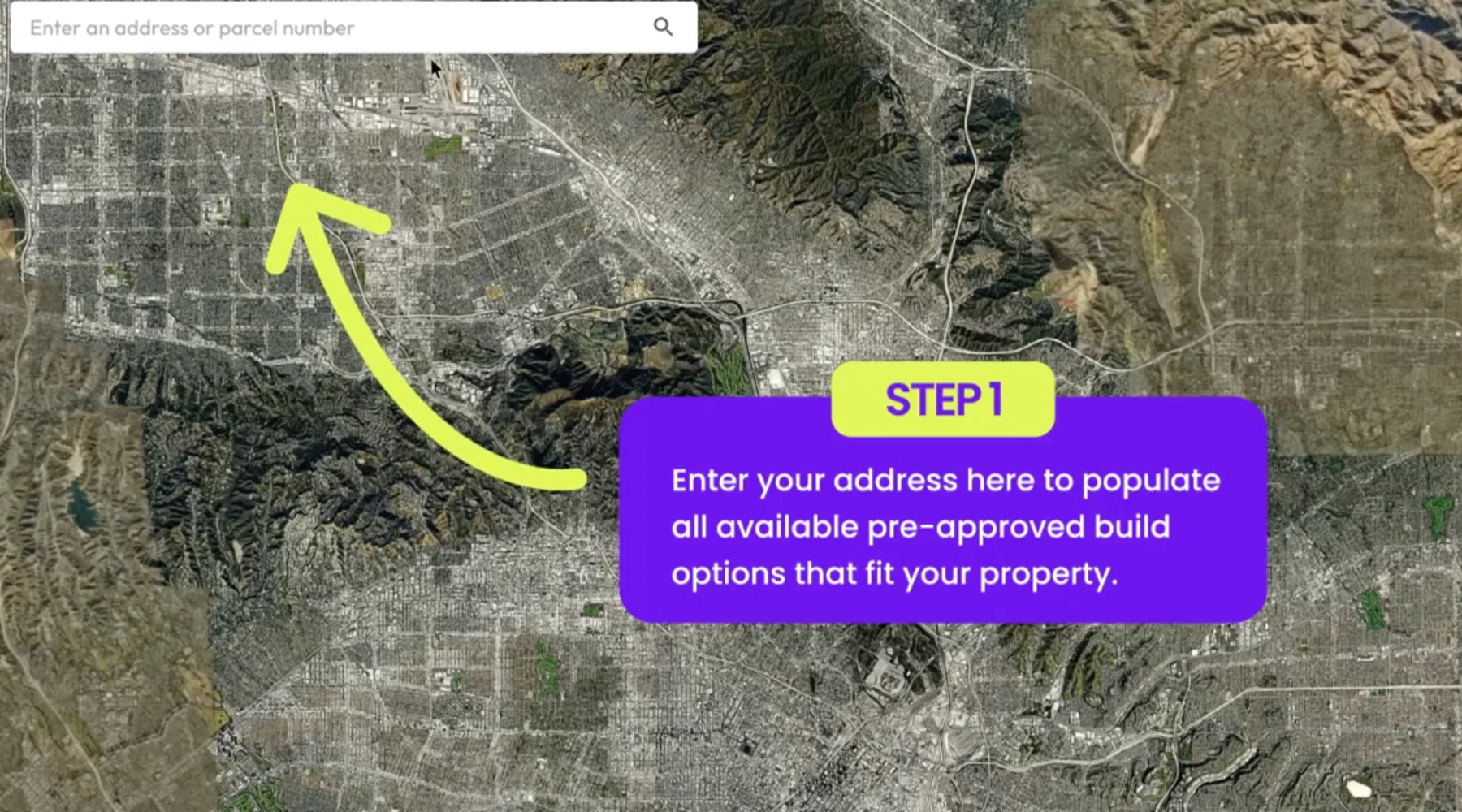
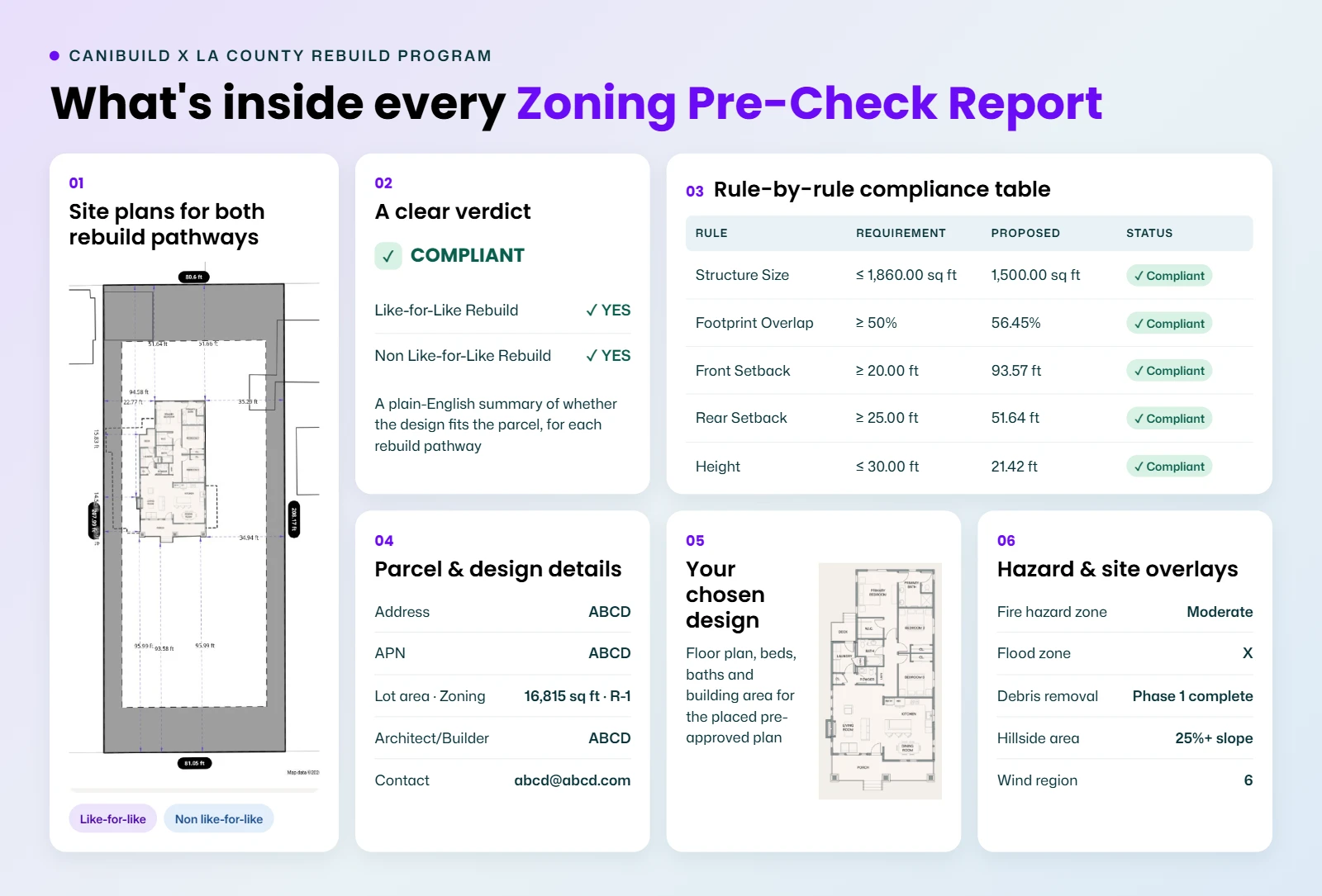
This is the specific challenge the LA County Pre-Approved Plan Portal targets: applicants having no fast way to confirm site-specific zoning and setback constraints before filing. We deployed the public-facing implementation of Canibuild’s FrontDesk product. It doesn’t touch the formal review process. It changes what happens before a form is submitted, for three different users at once:
- Homeowners enter an address and get a same-day answer on zoning, setbacks, and site constraints, plus a free pre-check report in under 30 seconds, instead of waiting on a callback.
- Builders and designers submit their plans, and Canibuild matches them only to lots where local rules allow them, so their billable hours go into projects that can be built.
- The county receives applications from homeowners who already confirmed their plan fits their lot’s zoning and setback rules before filing, so fewer applications need to be sent back for missing or incorrect site information.
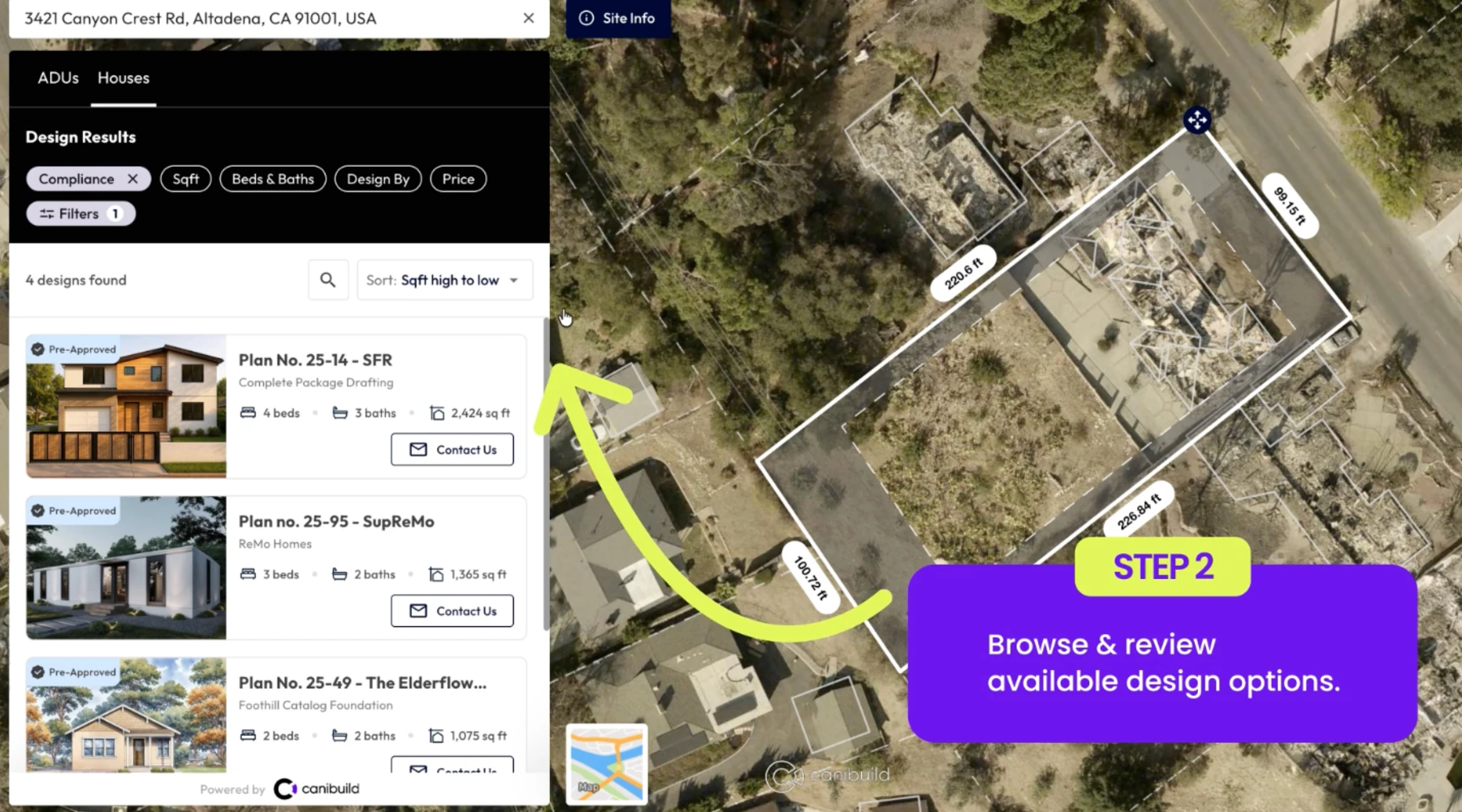
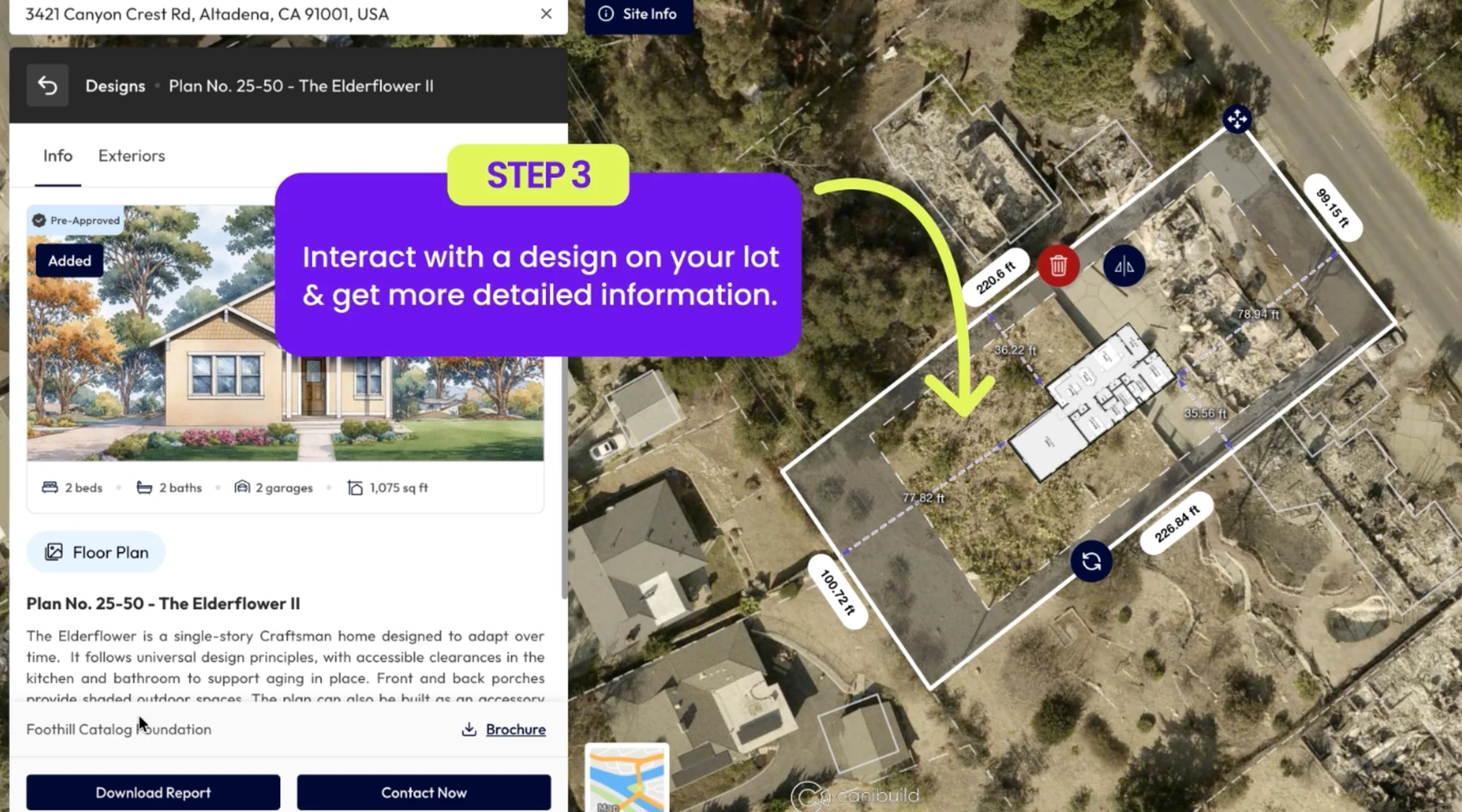
Rather than handing a homeowner a static list to interpret alone, the portal filters LA County’s catalog of pre-approved plans down to the ones that are compliant with that specific lot, by build type, size, and bedroom count. The pre-check report is free to download, and the portal surfaces multiple builders with direct contact information rather than steering homeowners toward any single option.
Move that confirmation step earlier, and the applications that reach a reviewer’s desk arrive more complete. That’s the single biggest lever available for shrinking a backlog that isn’t caused by lack of effort on anyone’s part.
What community recovery in LA looks like so far
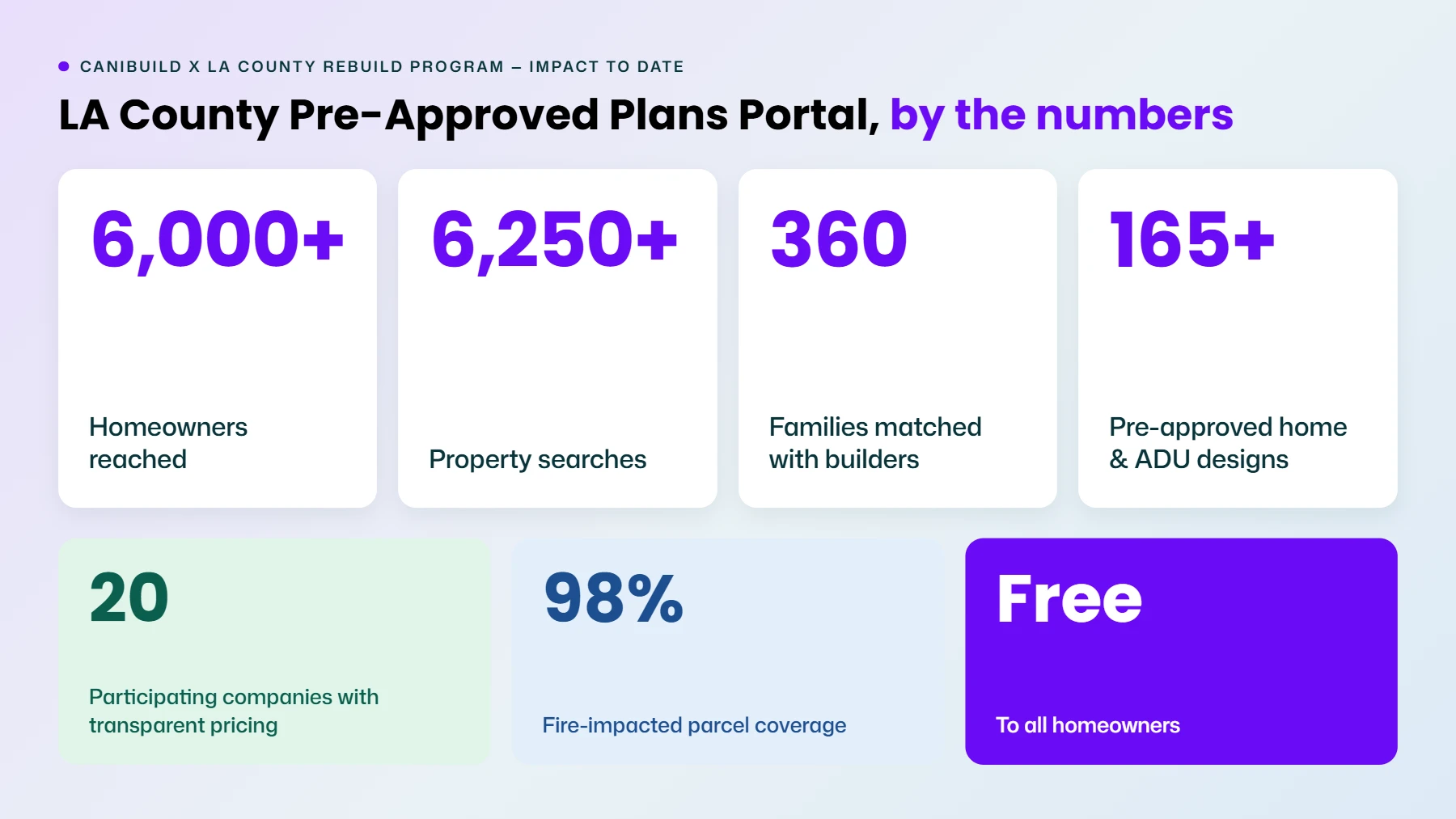
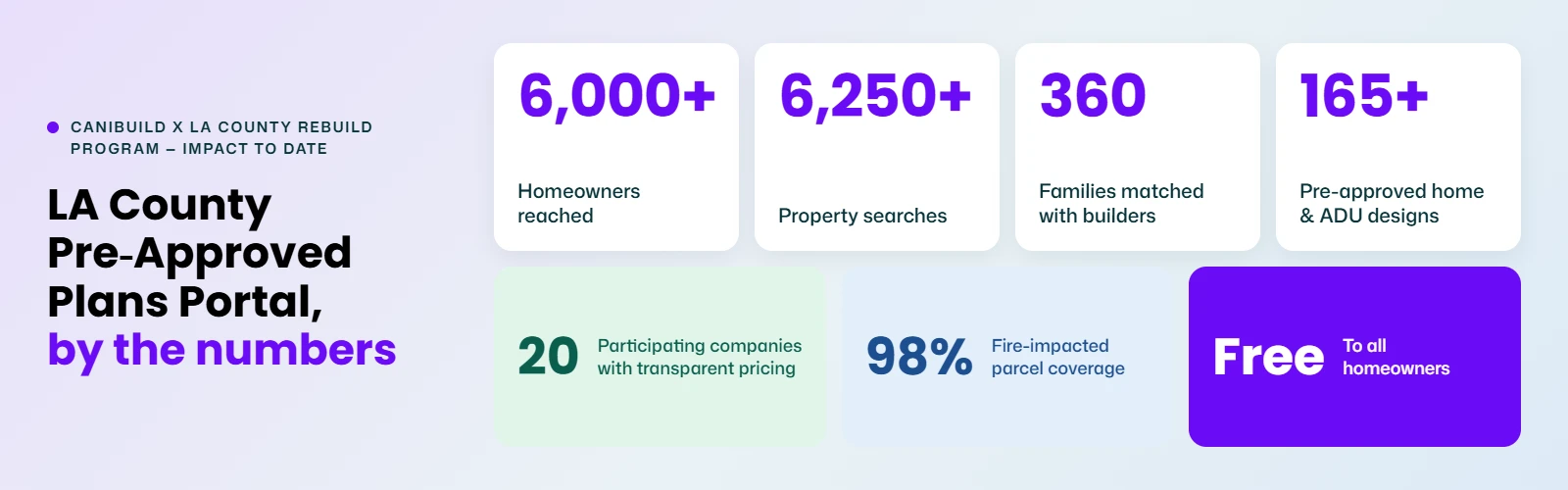
In less than a year, the portal has reached more than 6,000 homeowners, covering 98% of fire-affected parcels. Those homeowners have run 6,250+ property searches and have been matched with builders more than 360 times. The plan catalog itself has grown to 165+ pre-approved home and ADU designs, contributed by 20 participating design and builder companies and offered through 20 licensed builders with transparent, upfront pricing.
The effect on processing time has been direct. Because plans arrive at the county already pre-approved, reviewers spend less time on the small, repetitive errors that used to send an application back for resubmission. Applications now clear county review on an average of 30 business days, meeting California’s statutory review ceiling under AB 2234 even amid a historic surge in fire-rebuild applications. That’s a significant drop from the long timelines homeowners faced before the portal launched.
“It is very much one of our success stories. You pull it up, you show them the Canibuild tool, and it just blows people’s minds all the time. It really helps.”
— Ciara Barnett, Assistant Deputy Director, LA County Public Works
Why data accuracy matters for government adoption
A government agency linking to this portal is telling thousands of active rebuild applicants that the zoning, setback, and hazard information for their specific address is something they can act on. That claim depends on the accuracy of the underlying parcel, elevation, and hazard-overlay data. This is because the plan-catalog filtering and the county review that follows rest on this information being correct. Hazard designations carry their own construction requirements under state and county fire code, which raises the stakes in getting this particular piece of data correct.
That’s why a government agency putting this in front of thousands of applicants needs more than an assurance that the data is accurate. It needs a way to check that independently, without running its own audit. The geocoding, elevation, and 3D mapping data behind Canibuild’s site-specific answers has already had that check done: in September 2025, Canibuild was named #1 in Real Estate, globally, at the Google Maps Platform Awards, selected from nearly 4,000 submissions worldwide.
This kind of independent, global-scale review and recognition of the mapping infrastructure that LA County residents rely on for their same-day answers is the kind of validation a public agency typically looks for before standing behind a new tool.
The takeaway for other jurisdictions
Disaster recovery creates the same structural problem as any large-scale backlog of routine residential inquiries: staff capacity doesn’t scale with the number of parcels asking questions at once. A parcel-specific self-service layer in front of a planning counter keeps reviewer judgment in place. What it changes is the starting point residents and design professionals have before they file, which is what determines whether the application that reaches staff is complete.
LA County’s version has been live since December 1, 2025, and has reached more than 6,000 homeowners. Any jurisdiction facing a similar volume challenge already has a working example to look at.
Give residents the same-day, parcel-specific zoning answer before they file, and get complete applications back.
Book a demo, and we’ll show you FrontDesk running on real parcels in your jurisdiction: zoning eligibility, setback compliance, and hazard overlays in one answer.
Book a demoQuick answers
What is the Canibuild LA County portal?
The LA County Pre-Approved Plan Portal is a parcel-specific tool built on Canibuild’s FrontDesk product that gives homeowners and builders instant zoning, setback, and site-constraint information, plus a downloadable pre-check report, for any address in the rebuild zone.
How many homeowners have used the Canibuild LA County portal?
More than 6,000 homeowners have used it since it went live on December 1, 2025, covering 98% of fire-affected parcels, with 6,250+ property searches run and 360+ builder matches made.
Does the portal replace LA County’s formal permit review?
No. It’s a pre-check tool that confirms feasibility before submission; formal review and permit issuance still happen entirely through LA County.